Episode 616 Show Notes- Trump Tariffs Rattle Markets: Market Panic or Strategic Reset?
↓ The P.A.S. Report Podcast is on every podcast platform! ↓


Episode Description
As markets react to President Trump’s new tariffs, Americans are starting to feel the pressure. In this episode of The P.A.S. Report, Professor Nick Giordano breaks down the week ahead and what’s at stake. Do the American people have the resolve to support Trump’s economic strategy, or is confidence beginning to crack? With media fearmongering ramping up and globalists sounding the alarm, will Trump hold the line, or will the pressure force him to back down? And most importantly, what’s the real long-term play behind these tariffs?
Episode Highlights:
- Market reaction update: Why investors are jittery and how tariff uncertainty is fueling the drop
- Is free trade a myth? Why Trump’s critics overlook decades of unfair practices by other nations
- Trump’s long game: Using hard economic power to reshape global trade
- Can Americans endure short-term pain for long-term gain? The political risks of economic volatility
- Will BRICS gain ground as U.S. adversaries test Trump’s resolve, and what this means for America’s global position
📲 Subscribe, listen, and share The P.A.S. Report Podcast to stay informed on the latest political issues shaping America.
Click play above to listen to the entire episode or you can listen on any podcast platform
Show Notes- Trump Tariffs Rattle Markets: Market Panic or Strategic Reset?
Welcome to The P.A.S. Report Podcast
[Auto-Generated Transcript]
Welcome to The P.A.S. Report Podcast. This is your host Professor Nick Giordano. Make sure you follow and subscribe to the podcast so you never miss an episode. Also, visit the P.A.S. Report website at pasreport.com, and share this episode with your family and friends.
Today, we’re diving into a topic that’s going to dominate headlines this week, and for weeks to come: the markets, the Trump tariffs, and whether the American people have the stomach to see this through.
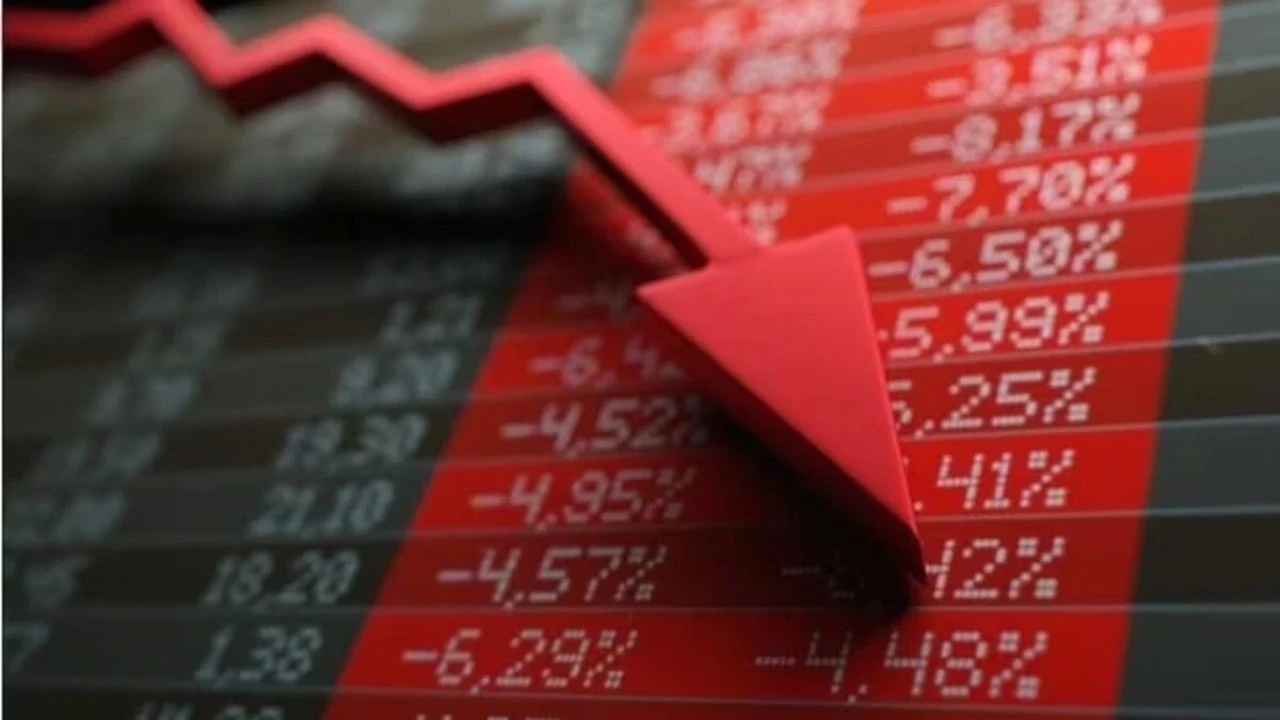
Over the last several days, we’ve seen markets take a noticeable dip. The Dow has lost around 9%, the S&P has dropped about 10.5%, and the Nasdaq about 11%. There is little doubt that investors are rattled. Those with 401k’s, IRA’s, or other investment accounts are certainly growing nervous.
President Trump is getting the full force of blame for the volatility. And to be fair, there’s no doubt that tariffs have injected a dose of uncertainty into the economy because no one knows for certain how this is going to play out.
And the question we need to ask, one that I brought up a few weeks ago: Is the pain worth it? Is this the price of rebalancing the global economic landscape? There’s little doubt that this is a seismic shift when it comes to America’s trade policies.
Trump is taking flak from all sides. Now, it’s not surprising to see Democrats attacking the President’s economic policies, because let’s face it, after being lost in the wilderness since last year’s election results, they now see an opening to remain relevant.
But Republicans are criticizing the President’s policies too. Some are arguing that the tariffs are irresponsible. Others say the focus should be on free trade, as that has been a cornerstone of the Republican party platform for decades.
We’ve constantly been told that “free trade” is the holy grail of economic policy. We were told it would lower costs, increase competition, and raise living standards. But here’s what they didn’t tell you: it only works when everyone plays by the same rules. And the fact is, many of our trading partners haven’t. While we’ve opened up our markets, they’ve protected theirs. Just about every country tariff American products. And there are other countries that not only unfairly tariff our products, but they also steal intellectual property and manipulate their currencies to gain a competitive edge.
So when I hear the arguments about free trade, I have to ask, what free trade are they talking about? Because the system we’ve had isn’t free, and it’s been largely one-sided. Trump is slapping on tariffs in an attempt to force countries to the table and restructure that system, ultimately, to put America back in a position of strength.
But that comes with risk. And markets don’t like risk. Investors hate uncertainty. They like predictable conditions, and tariffs disrupt the status quo. That’s what we’re seeing play out now. The question is whether the American people will start to panic, too. Will they listen to the doom-and-gloom from Wall Street, the globalist class, and the media? Or will they be willing to stick with the President to see the policy through?
In this episode, we’re going to break it all down. I’ll give you a deeper look at the market reaction and what’s really behind the drop. We’ll look at the broader global dynamics, who’s negotiating, who’s resisting, and what this means for our adversaries like China, and the rise of economic blocs like BRICS. And finally, in segment four, I’ll talk about whether Trump’s long-term strategy is even achievable, and what it means for the American people going forward.
So, buckle up. This episode is going to cut through the media spin and give you a clear view of what’s really happening and why it matters. Let’s get into it.
Break
Markets, Meltdown Hysteria, and the Real Story
Welcome back to The P.A.S. Report podcast. So it’s been less than a week since President Trump announced his tariffs, and if you’ve turned on the TV, scrolled social media, or opened a news app, you’d think we were on the brink of a global economic collapse.
The headlines are screaming. Words like “meltdown,” “panic,” “uncertainty,” and “freefall” are being thrown around like candy. Analysts are flooding the airwaves with dire warnings.
Big banks like JP Morgan are increasing the chances of a recession to 60%, and while I don’t disagree with the recession fears, it seems that we have forgotten that markets are supposed to move based on long-term fundamentals, not just headlines.
And listen, I’m nervous too, but we have to remember, it’s only been two days, and it’s not like any of this was a secret. Trump campaigned on these tariffs.
While the markets have dropped and volatility has increased, that’s no the full picture. The media is in the business of fear, and what hasn’t gotten nearly that same amount of attention is the flood of investment announcements coming into the United States, including Taiwan Semiconductor, Hyundai, and other companies that are rethinking their supply chains and starting to put down roots within the United States.
These are smart companies that have been around for a while. Ask yourself, if they really believed the U.S. economy was on the brink of collapse because of the Trump tariffs, why would they make multi-million and billion-dollar investments in the United States?
These aren’t emotional investors. These are calculated, strategic investments made with a long view. And that long view is this: America is still the most attractive market in the world. The tariffs may rattle the short-term nerves of Wall Street, but they’re forcing global industries to reconfigure in a way that has the potential to benefit their companies as well as American workers and our national security in the long run.
Understand, we have the largest consumer-based economy in the world. No other country can come close to our markets, and I don’t think people realize the leverage we have.
And sure, not everyone will stand to benefit from these tariffs, and they don’t come without risks. There will be winners and losers, which is true of any major economic shift, just look at the bank bailouts during the mortgage meltdown crisis.
Now, we have a President that’s reexamining our strategic interests, and some industries, especially those that have been hollowed out by decades or outsourcing, will stand to gain, while those that rely on cheap imports will begin to feel the squeeze.
No one ever said that rebuilding the global economic order would be easy and we can’t just obsess over the markets like they’re the only barometer that matters. That’s a mistake. Markets reflect sentiment in real time, but they don’t always reflect reality.
What I mean by that is just look at how our market has been artificially manipulated over the last few decades between massive federal spending, stimulus, quantitative easing, and keeping interest rates artificially low for so long. We are overdue for a major correction, and we can’t just react to news cycles driven by fear.
There are far bigger forces at play here. That’s why it’s important to take a step back and ask: is the short-term discomfort worth it if we can achieve long-term gains? If we can reassert our sovereignty, economic independence, and dominance, and most importantly, use our strategic advantages to put in place policies that benefit America and the rest of the world? That’s the question the American people have to wrestle with.
We also need to look at the global community, because as I said, it’s not like these policies don’t come without risks. We have to look at how countries are reacting, who wants to negotiate, and what countries may attempt to try to outlast Trump. I’ll also look at whether Trump’s policies could empower economic alliances like BRICS, and whether BRICS can use this to expand their influence and continue a global movement away from the dollar.
So hang tight, and we’ll be right back.
Break
The Global Stakes: Risks, Retaliation, and Realignment
Welcome back to The P.A.S. Report Podcast. We’re covering the Trump tariffs today, and as I alluded to before, these tariffs come with risks. No serious person should pretend otherwise. This is not some pain-free reset button. We’re now entering a phase where the global economic order is being stress-tested, and it’s already triggering retaliation.
China has responded with its own set of tariffs targeting American exports. The European Union, for its part, is calculating its next move. They haven’t retaliated yet, but they’re watching closely and weighing their options. Some expect the EU to increase tariffs on the United States. That’s what makes this moment so delicate because when countries escalate tariffs in response, it quickly evolves into a full-scale trade war if it’s not managed correctly.
But something that gets lost in the mix is that for decades, American presidents—both Republican and Democrat—have tried to fix trade imbalances using soft power. Quiet diplomacy, backchannel negotiations, closed-door talks at global summits. And guess what? It hasn’t worked. Not with China. Not with the EU. Not with anyone.
The United States has been extraordinarily patient. We’ve opened our markets, played by the rules, and absorbed the costs of globalization. Meanwhile, countries like China and others have played an entirely different game. They’ve heavily subsidized their industries, steal intellectual property, and manipulate their currencies.
Every administration since the ’90s has talked about getting tough. Trump is the first to actually do it, and he’s doing it through the use of hard economic power.
And let’s look at China for a minute. Can they go toe-to-toe with the U.S. in a prolonged economic standoff? It’s not as clear-cut as some might think. While they’ve built themselves into an economic superpower over the last 30 years, their economy has been on a downward trajectory in recent years. Growth is slowing. Youth unemployment is skyrocketing. Real estate is collapsing. And foreign investment is drying up.
But here’s the biggest pressure point: the Chinese Communist Party governs over 1.3 billion people, and since 1990, somewhere between 600 to 800 million of those people have moved from poverty into the middle class. That’s the foundation of the CCP’s legitimacy. It’s economic growth.
So the question becomes: how long can Beijing afford to absorb economic pain before that middle class starts to feel it? And once they do, will they remain compliant? Don’t forget, nearly 18% of Chinese exports rely on Americans buying their products. They can make deals with a hundred countries, and it still won’t make up for losing access to the American marketplace.
The CCP understands this threat. They know they’re walking a tightrope. And while they might project strength publicly, behind the scenes they’re worried because internal unrest is the one thing they fear more than American tariffs.
Still, we can’t lose sight of the fact that the world stage is a global chessboard. We also can’t ignore the fact that other players are moving their pieces, particularly the BRICS. The BRICS has slowly been expanding its influence for the last two decades.
BRICS have openly stated their desire to oust the U.S. Dollar as the global reserve currency, and this has the potential to allow them to increase their influence and build out a parallel financial system that could challenge our dominance in the long run.
Trump’s tariff strategy is bold and aggressive, but it also carries risk. However, the old approach hasn’t been working for quite some time, and while people generally support the status quo, the truth is the path we were on was unsustainable. We’ve been losing ground as trade deficits exploded, our national debt exploded, and our industries have been hollowed out. We are weaker today than we were 20 years ago.
Trump is betting that the strength of the U.S. economy, combined with our global leverage, gives us the upper hand in these negotiations.
The question now is will we see it through or will political pressure force Trump to pull back?
I’ll talk about that when we get back from this quick break, so hang tight, and we’ll be right back.
Break
The Long Game- The Trump Tariffs and the American Will
Welcome back to The P.A.S. Report podcast. So what exactly is Trump’s long-term strategy here?
It’s not just about tariffs for tariffs’ sake. It’s about fundamentally restructuring the global economic system in a way that re-centers the United States as the world’s economic powerhouse, and ending the era where America carries the global economy on its back.
Trump’s betting on hard leverage. He knows we still hold the dominant position in global finance, in consumer markets, and in innovation. And he’s using that leverage to force other nations, many of whom have taken advantage of the U.S. for years, to come to the table and play fair. That’s the goal: a fairer system that strengthens American sovereignty and restores balance in global trade relationships.
I keep hearing that Trump wants to destroy the economy. Not for nothing, but Trump is one of the biggest narcissists out there. He likes to put his name on things, and he wants to be recognized as being bold and successful. He has staked his entire legacy on this, and I don’t think he looks at failure as an option.
So it gets to the more important question. Is what the President wants actually achievable?
That’s the big question. In theory, yes. But it depends on two things: first, whether the U.S. government stays committed to this course, not just Trump, but Congress and future administrations. And second, whether the American people are willing to ride out the storm.
Because this strategy isn’t painless. No magic wand restructures decades of bad trade deals and economic offshoring overnight. It requires time, and in that time, certain industries will hurt. Prices may rise in the short term. Market volatility will continue. And the media will use every dip in the stock market to scream that the sky is falling.
So the real variable here isn’t China. It’s not the EU. It’s not BRICS. It’s us. The American people. Do we have the stomach to see this through? Are we willing to endure short-term discomfort in exchange for long-term strength?
Because here’s the truth: the only thing that’s certain is that this will make or break the Trump administration. This is the issue that will define his second term. It will define his legacy.

If the strategy works, Trump will be remembered as the first president in modern history to challenge the global economic order and reassert American strength. If it fails, his critics will claim vindication, and the political fallout will be enormous, not just for Trump, but for the entire MAGA American First movement.
While it’s important to pay attention to the markets, it’s also important to watch the negotiations, the deals being made, and the shifting alliances. This isn’t about stock prices, it’s about power. It’s about who controls the future of the global economy.
To listen to the full episode, click play above or visit your favorite podcast platform!
The Forgotten Founding Father: Gouverneur Morris and We the People
The P.A.S. Report wants to hear from you. Send your feedback to podcast@pasreport.com. Please leave a 5-star rating and write a review on Apple Podcast.
Please share this episode with others & on social media.
*PA Strategies, LLC. may earn advertising revenue or a small commission for promoting products or when you purchase through any affiliate links on this website and within this post.