

Episode Description
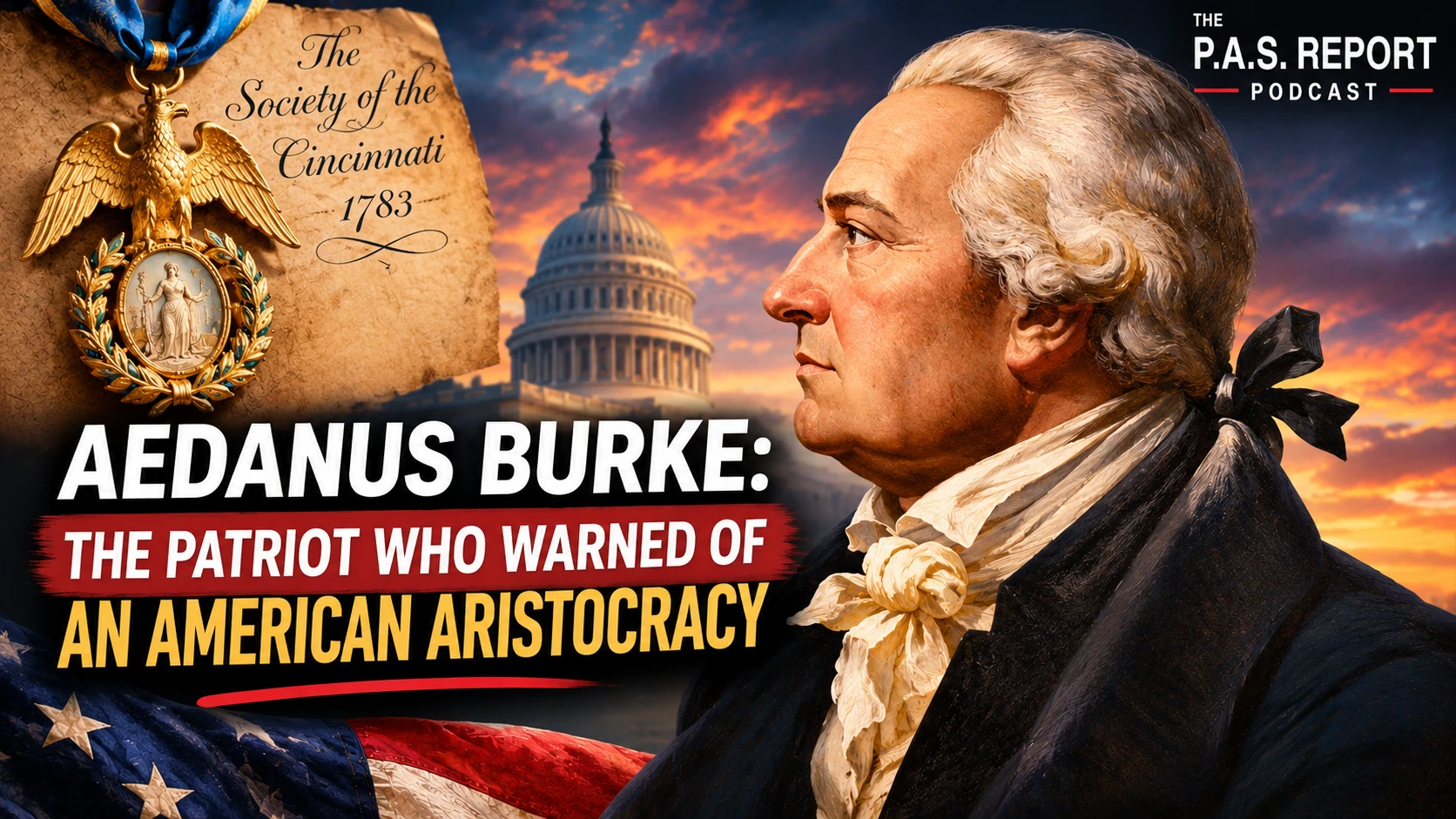
Aedanus Burke warned of an American aristocracy in 1783 and George Washington agreed. Have political dynasties and Congress become the ruling class he feared?
In 1783, Revolutionary War patriot Aedanus Burke challenged George Washington’s Society of the Cincinnati over hereditary privilege and the threat of a new American nobility. On this episode of America’s Founding Series on The P.A.S. Report Podcast, Professor Nick Giordano connects Burke’s forgotten warning to Washington’s entrenched political class, the decline of statesmanship, and $635.6 million in reported congressional stock trades in 2025. From Nancy and Paul Pelosi’s investment disclosures and the STOCK Act to the 2026 South Carolina Senate defeat of Darline Graham by Annie Andrews, the episode confronts the dangers of political entitlement and conflicts of interest. Did Americans overthrow a monarchy only to tolerate a political elite that treats public office as a personal privilege?
What You’ll Learn In This Episode:
- Aedanus Burke’s Forgotten Warning: Why a Revolutionary War patriot and former British prisoner challenged the Society of the Cincinnati over hereditary privilege and the threat of American aristocracy.
- Politicians vs. Statesmen: Why career politicians pursue reelection and political power while true statesmen confront uncomfortable truths, temper expectations, and place the country above personal ambition.
- Congressional Stock Trades and Wealth: Why $635.6 million in reported 2025 stock trades, the STOCK Act, and Nancy and Paul Pelosi’s financial disclosures raise serious questions about conflicts of interest and public trust.
- Political Dynasties and the 2026 Midterms: What Darline Graham’s defeat in South Carolina reveals about voter concerns over political inheritance, experience, qualifications, and merit.
- America’s New Aristocracy: Why the American Revolution’s rejection of hereditary power remains relevant to political elites, constitutional accountability, and the responsibility of ordinary citizens.
⭐ Help Keep Authentic American History Alive:
If you believe the sacrifices that built this nation must never be forgotten, follow The P.A.S. Report Podcast, leave a 5-star rating on Apple Podcasts or Spotify, and text a link to this episode to 3 or 4 friends and family members right now.
Click play above to listen to the entire episode or you can listen on any podcast platform
00:00 Aedanus Burke and the Threat of American Aristocracy
02:22 Aedanus Burke: Revolutionary Patriot and British Prisoner
04:51 Society of the Cincinnati: America’s Hereditary Elite?
06:19 Burke’s Cassius Warning and George Washington’s Response
08:48 Political Dynasties: America’s New Aristocracy?
13:08 Congressional Stock Trading: Pelosi, Power, and Wealth
15:31 South Carolina Senate Race: Merit vs. Political Dynasty
Aedanus Burke: The Warning That Exposes America’s Political Elite
You fought a revolution to escape a ruling class. You rejected a monarchy because no family should possess an inherited right to power. But what happens when the people who defeat a king create a new political elite of their own? More than 240 years after the American Revolution, the United States faces a question that patriot Aedanus Burke raised in 1783: Did Americans overthrow a monarchy only to recreate the privileges and political hierarchies they once fought to escape?
In this episode of The P.A.S. Report Podcast’s America’s Founding Series, Professor Nick Giordano explores the forgotten patriot who warned Americans about the dangers of a new aristocracy. In 1783, South Carolina judge Aedanus Burke published his famous Cassius pamphlet, which challenged the Society of the Cincinnati and its hereditary membership provisions. Burke feared that Revolutionary War officers could establish a privileged class that undermined the principles of the republic. His warning went beyond one organization. It raised a fundamental question about the concentration of political power, the privileges of public office, and the responsibility of citizens to defend representative government.
Aedanus Burke and the Society of the Cincinnati: The Threat of American Aristocracy
The American Revolution promised a nation where merit, liberty, and individual achievement mattered more than family name or inherited status. Yet the Society of the Cincinnati’s hereditary membership provisions raised concerns about a new American nobility. Burke challenged that contradiction and warned that the revolutionary generation could defeat British monarchy only to establish a new hierarchy at home. His criticism helped spark a national debate about republican government, George Washington’s role, and the dangers of hereditary privilege.
Politicians vs. Statesmen: The Rise of America’s Permanent Political Class
Today’s political establishment raises another question: Where have the statesmen gone? A politician tells you what you want to hear. A statesman tells you what you need to hear, tempers expectations, and puts the country’s interests ahead of personal ambition. Yet Americans continue to reelect members of Congress for decades, while incumbency, political connections, and access to power help entrench the same political class. Congressional stock trading, the STOCK Act, and Nancy and Paul Pelosi’s financial disclosures add another dimension to the debate over conflicts of interest, personal wealth, and public trust. When does public service become a path to privilege rather than a commitment to the people?
Political Dynasties, Congressional Wealth, and the Rejection of Aristocracy
The 2026 South Carolina Senate election offers a modern test of Burke’s warning. President Trump appointed Darline Graham to fill the remainder of her brother Lindsey Graham’s Senate term, and the Republican establishment backed her campaign for a full term. But Democrat Annie Andrews defeated Graham in November. Voters also expressed concerns about Graham’s experience, and the result unfolded amid broader dissatisfaction with the Republican establishment. The outcome raises an important question: Do Americans still believe political office belongs to those who earn it, or will they accept political succession as a birthright? As the nation marks America 250, Burke’s warning deserves renewed attention. A republic cannot survive on the reputation of its founders alone. It requires citizens who reject political entitlement, demand accountability, and defend the principle that no one has a birthright to rule.
Questions This Episode Raises
- Why did Aedanus Burke believe the Society of the Cincinnati threatened American republicanism?
- Why did George Washington support changes to the Society’s original hereditary membership provisions?
- When does decades of congressional service turn experience into entrenched political privilege?
- What do congressional stock trades and the Pelosi financial disclosures reveal about conflicts of interest and public trust?
- Did South Carolina voters reject a political coronation, and what does that result reveal about the future of political dynasties?
Subscribe to the podcast and share this link to help more people rediscover the forgotten patriots who built the foundation of the United States.
The P.A.S. Report wants to hear from you. Send your feedback to podcast@pasreport.com. Please leave a 5-star rating and write a review on Apple Podcasts.

Please share this episode with others & on social media.