↓ The P.A.S. Report Podcast is on every podcast platform! ↓


Episode Description
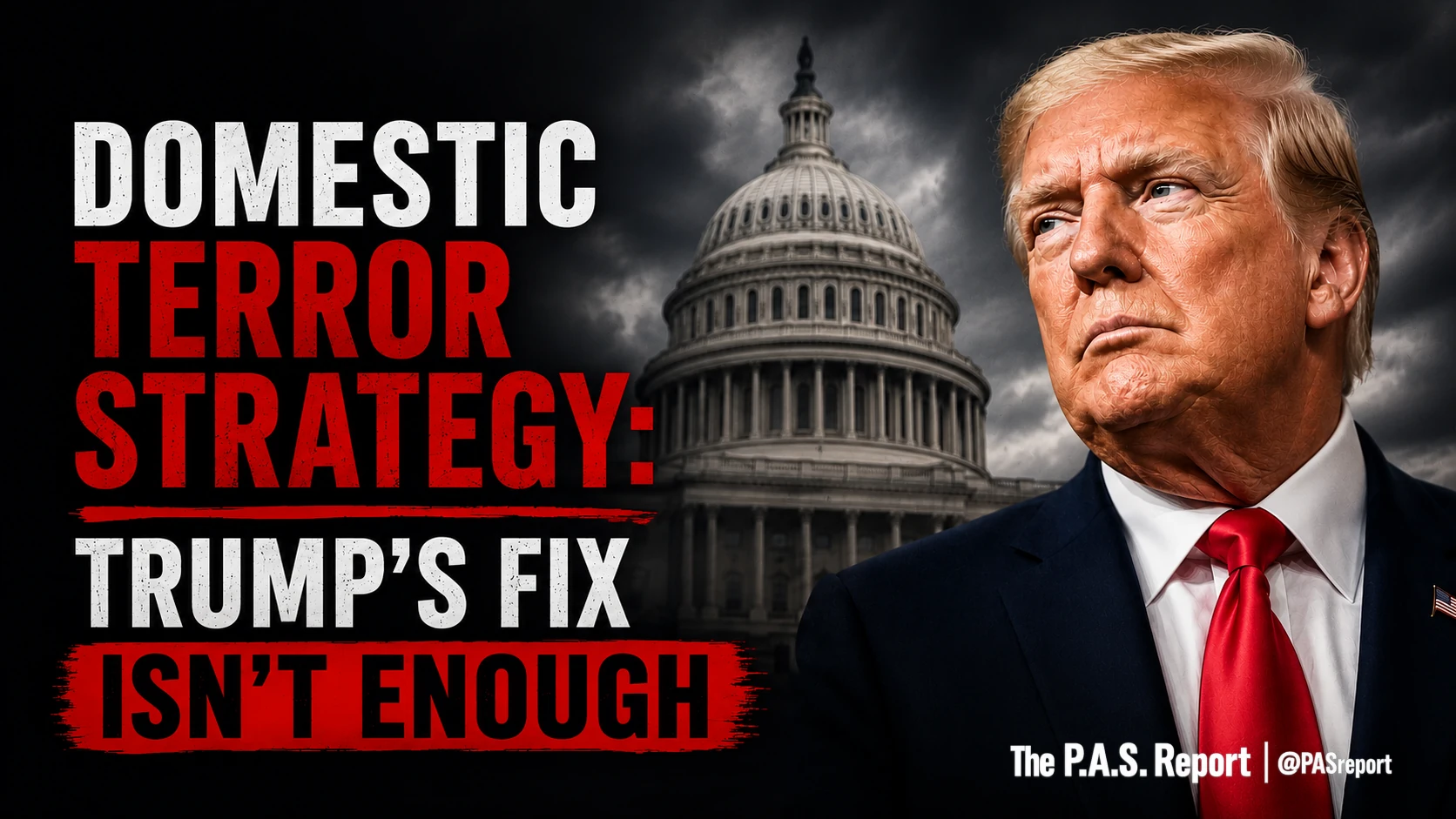
The National Strategy for Countering Domestic Terrorism has been rewritten and the domestic terror strategy has changed, but has the real problem actually been solved? Nearly five years after the Biden administration transformed domestic surveillance, the Trump administration narrowed the counterterrorism focus back toward violence and criminal conduct.
This episode of The P.A.S. Report Podcast examines the Trump administration’s revisions to the domestic terror framework, the constitutional dangers of the previous guidelines, and why the permanent bureaucracy remains one of the greatest threats to American liberty. While the revised strategy strips away vague ideological metrics like “anti-government” and “anti-authority” sentiment, the administrative machinery that enabled recent government abuses remains fully intact. From intelligence-sharing fusion centers to public-private censorship pipelines and sweeping surveillance authorities, the underlying weaponization infrastructure is merely waiting for the next administration.
What You’ll Learn In This Episode:
- The Original Sin: How the 2021 Domestic Terror Strategy shifted the threshold away from criminal conduct and toward ideological “sentiment.”
- The Overhaul: Why the Trump administration’s policy pivot represents a necessary constitutional correction.
- The NSPM-7 Paradox: What National Security Presidential Memorandum 7 does, and how it could be turned against citizens again.
- The Surveillance Pattern: How the Patriot Act, Total Information Awareness, and PRISM reveal 25 years of expanding bureaucratic power.
- The Congressional Failure: Why Congress keeps passing clean FISA reauthorizations while abdicating real oversight.
Five years later, the debate is no longer about one president or one party. It is about whether a constitutional republic can survive a weaponized bureaucracy that treats political dissent, free speech, and ideological disagreement as predictive threat indicators.
📲 Subscribe, listen, and share The P.A.S. Report Podcast to stay informed on the latest political issues shaping America.
Click play above to listen to the entire episode or you can listen on any podcast platform
Timestamps
- 00:00 The Domestic Terror Strategy and the Threat to Liberty
- 05:44 How “Anti-Government Sentiment” Became a Warning Sign
- 08:23 The Rise of Domestic Ideological Surveillance
- 16:30 Trump’s Revisions: A Necessary Course Correction
- 21:32 NSPM-7 and the Risk of Future Weaponization
- 29:11 The Permanent Bureaucracy Behind the Surveillance State
- 40:05 Why Congress Must Dismantle the Machinery
Domestic Terror Strategy: Why Trump’s Reforms Don’t Solve the Bigger Problem
You probably assume that when a government targets domestic terrorism, it focuses on violence, criminal conspiracies, and genuine threats to public safety. But what happens when the definition of a threat expands beyond criminal conduct and begins to include vague concepts like “anti-government” or “anti-authority” sentiment? That’s exactly the concern many Americans have raised over the last five years as the federal government dramatically expanded its domestic terrorism framework.
In this episode of The P.A.S. Report Podcast, we dive deep into the evolution of the National Strategy for Countering Domestic Terrorism, the Trump administration’s recent revisions, and the larger constitutional questions surrounding government power. While the new framework moves away from ideological categories and back toward violence and criminal conduct, the deeper concern remains unchanged: the bureaucracy, surveillance infrastructure, and intelligence-sharing systems that enabled previous abuses still exist.
How the Domestic Terror Strategy Shifted Away From Criminal Conduct
The original 2021 National Strategy for Countering Domestic Terrorism marked a significant departure from traditional counterterrorism efforts. Instead of focusing exclusively on violence, material support, criminal coordination, and operational threats, the framework introduced vague concepts such as “anti-government sentiment,” “anti-authority sentiment,” and extremist narratives. Critics argued that these subjective categories created opportunities for government agencies to blur the line between lawful dissent and potential security threats. Once ideology becomes part of the investigative framework, constitutional protections become increasingly vulnerable.
Why Trump’s Revisions Matter But Don’t End the Debate
The Trump administration’s revisions represent a meaningful course correction. The updated strategy narrows the focus back toward violence, criminal conspiracies, foreign influence operations, organized networks, and material support for unlawful activity. That distinction matters because constitutional systems are supposed to target conduct, not beliefs. However, the reforms do not dismantle the underlying infrastructure. Intelligence-sharing networks, public-private coordination systems, fusion centers, and domestic monitoring capabilities remain in place, creating the potential for future administrations to revive broader interpretations of domestic extremism.
The Real Issue: Can Congress Prevent Future Weaponization?
The most important question is not whether one administration uses these authorities responsibly. The real question is whether future administrations will. History shows that government powers rarely remain limited to their original purpose. From the Patriot Act and Total Information Awareness to PRISM and modern surveillance programs, emergency authorities often evolve into permanent features of government. Without statutory guardrails, future administrations could easily redefine threat categories and expand investigative powers once again. That leaves Congress with a choice: impose meaningful constitutional limits now or continue allowing executive branch authorities to expand regardless of who occupies the White House.
What You’ll Discover in This Episode
- How the 2021 Domestic Terror Strategy shifted the focus from criminal conduct toward ideological “sentiment”
- Why the Trump administration’s revisions represent a significant constitutional correction
- What NSPM-7 (National Security Presidential Memorandum 7) does and why it raises concerns
- How the Patriot Act, Total Information Awareness, and PRISM reveal a pattern of expanding government power
- Why Congress continues to preserve the surveillance infrastructure despite repeated warnings about abuse
🎧 Listen to the full episode now

📢 Subscribe to the podcast and leave a 5-star review
✅ Share the Episode
If you value real analysis over manufactured outrage, help spread the word. Subscribe, leave a 5-star review, and share this episode with a few people who will appreciate it.