↓ The P.A.S. Report Podcast is on every podcast platform! ↓


Episode Description
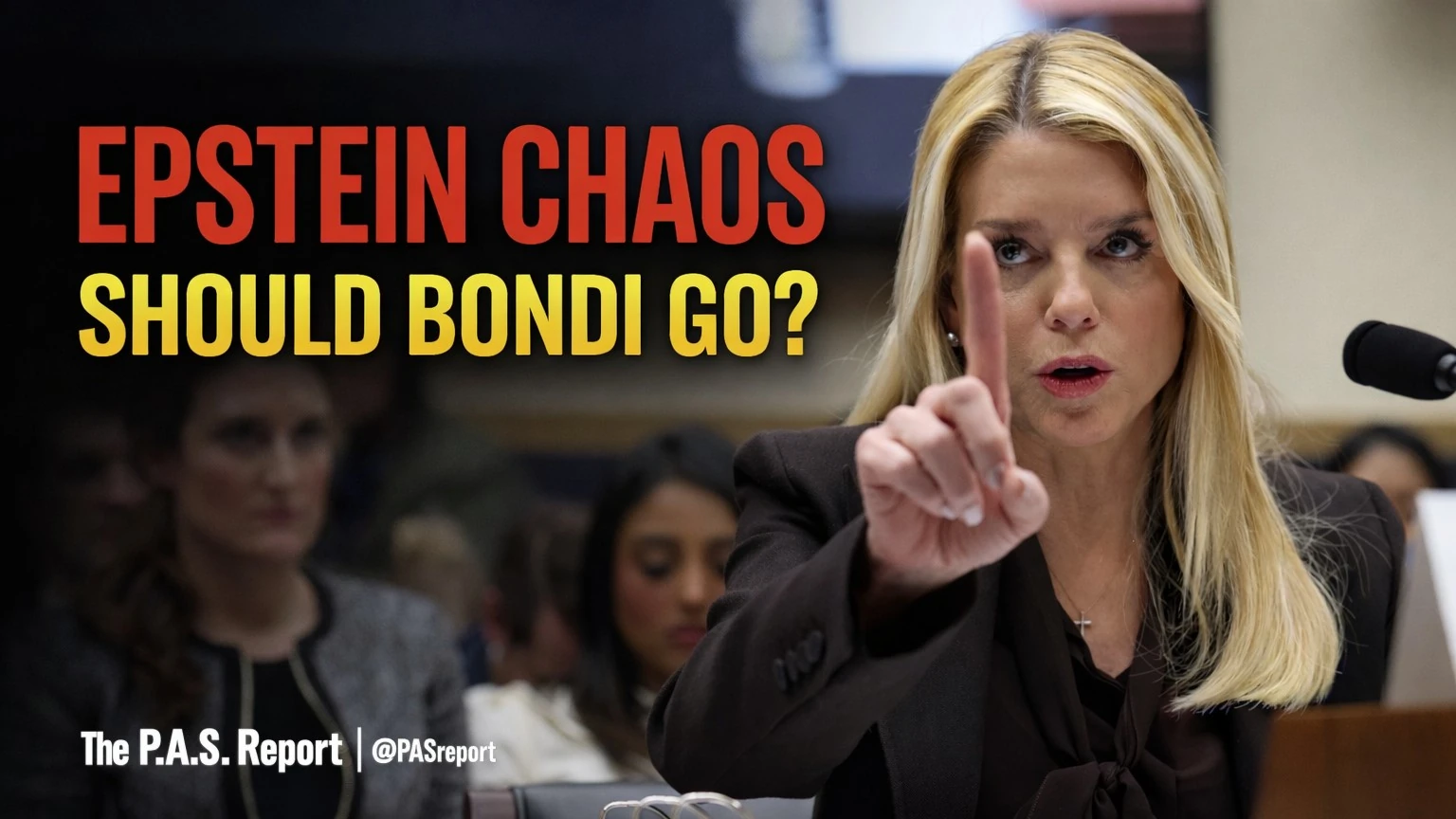
The Epstein Files chaos has exposed serious failures inside the DOJ. Is it time for AG Pam Bondi to step aside?
This episode breaks down what the Epstein Files reveal, what they do not, and why accountability requires more than document dumps and political theater. The controversy surrounding the Epstein Files has spiraled into confusion, speculation, and institutional dysfunction. This analysis separates allegation from evidence, examines the Department of Justice’s handling of the release, and asks whether meaningful reform is possible. Covering everything from due process and the presumption of innocence to congressional grandstanding and structural oversight failures, this episode delivers clarity in a moment dominated by noise.
What You’ll Learn
- Why the Epstein Files chaos reflects deeper DOJ leadership failures
- The difference between moral outrage and prosecutable evidence
- How Congress contributed to the dysfunction through performative oversight
- Why chaotic disclosure without context damages public trust
- What a serious, structured accountability commission should look like
- What Attorney General Pam Bondi and the DOJ can learn from the restructuring of the DNI under Tulsi Gabbard
This is not about protecting the powerful. It is about restoring equal justice under law and demanding competence from institutions that hold immense power over American lives.
📲 Subscribe, listen, and share The P.A.S. Report Podcast to stay informed on the latest political issues shaping America.
Click play above to listen to the entire episode or you can listen on any podcast platform
Timestamps
- 00:52 Critique of Government Accountability
- 03:21 A Tale of Two Officials: Competence vs. Chaos
- 05:39 The Fallout of the Epstein Files
- 19:04 Defending Due Process in the Epstein Case
- 29:13 The Need for Clarity and Accountability
- 31:03 The Role of Congress in the Epstein Files Debacle
- 33:24 An Epstein Accountability Commission and the Search for Truth
Epstein Files Chaos: What It Means for the DOJ and Pam Bondi
You are watching the fallout from the Epstein Files unfold in real time. Names are being released, documents are being dumped, members of Congress are tweeting accusations, and the Department of Justice is offering little clarity. You are left trying to figure out what is real, what is rumor, and whether any of this will lead to accountability. The noise is overwhelming, and the lack of structure is eroding trust.
In this episode of The P.A.S. Report Podcast, we dive deep into the Epstein Files chaos, the leadership questions surrounding AG Pam Bondi, and the broader institutional failures that allowed this saga to spiral. The focus is not on mob justice or partisan talking points. The focus is on due process, constitutional principles, and whether the DOJ is capable of reforming itself.
Why Pam Bondi and the Epstein Files Reveal a Deeper DOJ Failure
The Epstein Files are not just about proximity to a disgraced financier. They expose a breakdown in institutional competence. Chaotic disclosure without context has left the public guessing. Allegations are being treated as verdicts, and document dumps are replacing disciplined prosecutorial summaries. When a government agency with enormous power cannot clearly distinguish between allegation, investigation, and charge, confidence collapses.
This episode explores whether DOJ leadership has made the situation worse and whether self-inflicted wounds have compounded public distrust. It also asks whether reform is even possible without structural change.
What Congress Got Wrong in the Epstein Transparency Push
Congress demanded transparency. What the public received was volume without explanation. A law that forced document release did not require contextual analysis, investigative timelines, or clarity on prosecutorial decisions. That vacuum has fueled speculation and partisan theater.
The episode breaks down how members of Congress have amplified confusion by hinting at secret knowledge while failing to use their constitutional authority responsibly. It examines the Speech and Debate Clause and why oversight requires discipline, not social media performance.
The Rule of Law Versus Public Outrage
The most important principle at stake is the presumption of innocence. Being named in a document is not the same as being charged with a crime. Moral disgust is not evidence. At the same time, unresolved questions about investigations, plea deals, and prosecutorial discretion demand answers.
This episode separates legal guilt from moral judgment and explains why abandoning due process in the name of accountability would permanently damage the Republic.
The Questions No One Is Answering
If evidence of crimes existed, why were certain individuals not charged
Were investigative records mishandled, suppressed, or destroyed
Did intelligence agencies have any involvement
Why did multiple administrations fail to deliver clarity
What would a serious accountability commission actually look like
These are not partisan questions. They are constitutional ones.
🎧 Listen to the full episode now

📢 Subscribe to the podcast and leave a 5-star review
✅ Share the Episode
If you value real analysis over manufactured outrage, help spread the word. Subscribe, leave a 5-star review, and share this episode with a few people who will appreciate it.