
↓ The P.A.S. Report Podcast is on every podcast platform! ↓


Episode Description
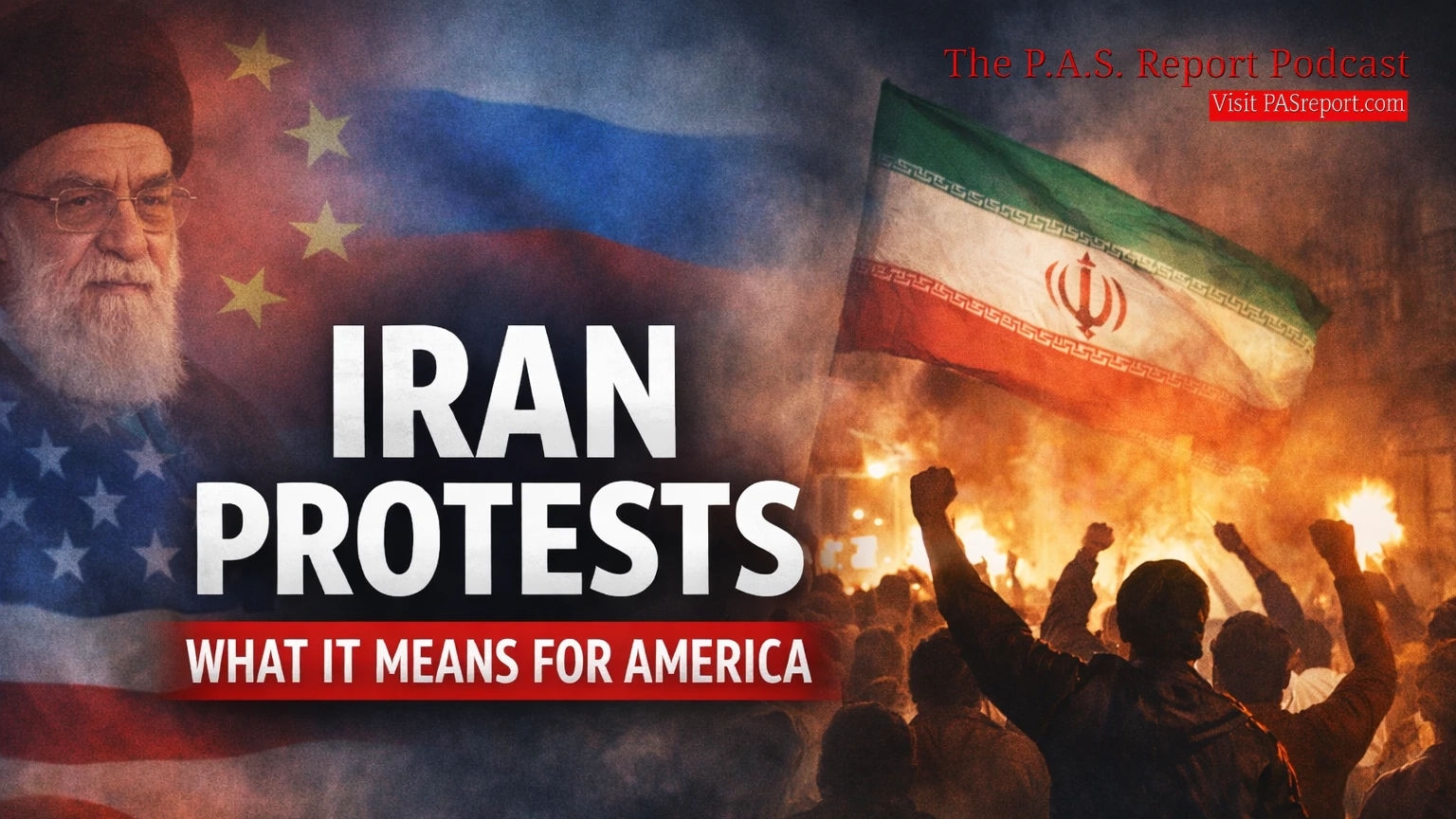
Iran protests are shaking the foundations of a brutal regime, but the real question is why this moment matters for the United States. In this episode of The P.A.S. Report, Professor Giordano breaks through media silence to explain the stakes, the risks, and the policy choices that could reshape the global balance of power.
As unrest spreads across Iran, exaggerated claims of imminent collapse collide with a far harsher reality. This episode examines what is actually happening on the ground, why Americans have already paid a heavy price for the Islamic Republic, and how Iran fits into the broader anti-American axis involving Russia, China, and Venezuela. The focus is not on slogans or wishful thinking, but on clear-eyed strategy, historical patterns, and realistic policy options.
What You’ll Learn:
- Why Iran protests are not just a domestic issue but a direct U.S. national interest
- How the Iranian regime has killed Americans through proxy warfare and why that history matters now
- What weakens authoritarian regimes and why elite defections matter more than street protests
- How Iran connects Russia, China, and a shifting Middle East into an anti-American axis
- Why the real policy choice is not war or indifference, and what a third path could look like
📲 Subscribe, listen, and share The P.A.S. Report Podcast to stay informed on the latest political issues shaping America.
Click play above to listen to the entire episode or you can listen on any podcast platform
Timestamps
- 00:52 The Current Situation in Iran
- 00:55 Understanding the Iranian Regime’s Popularity and Repression
- 08:29 Analyzing Conditions for Revolution in Iran
- 13:45 Why Should Americans Care About Iran?
- 19:46 Geopolitical Implications of Iran’s Stability
- 33:02 Exploring a Third Path in U.S. Foreign Policy
Iran Protests: What It Means for America and the Global Order
You keep seeing headlines about Iran protests, but the coverage feels fragmented, shallow, or strangely muted. You are told the regime is either on the brink of collapse or that the situation is too complicated to matter. Meanwhile, no one clearly explains why this moment matters for American security, U.S. foreign policy, or the shifting balance of global power. That uncertainty leaves you with the worst outcome: noise without understanding.
In this episode of The P.A.S. Report Podcast, we dive deep into what is actually happening inside Iran, why the brutality of the regime matters beyond its borders, and how Iran fits into a broader anti-American axis involving Russia, China, and weakened authoritarian allies. This is not protest hype or interventionist cheerleading. It is a sober, strategic breakdown of why Iran is a pivotal test case for modern power competition and American restraint.
Why the Iran Protests Matter to the United States
Iran is not a distant regional problem. Americans have already paid a heavy price for the survival of the Islamic Republic through decades of proxy warfare, terrorism, and targeted attacks that killed and maimed U.S. service members. Understanding the difference between the Iranian people and the Iranian regime is essential, because one seeks normalcy and prosperity while the other defines itself through hostility toward the United States.
Iran, Russia, China, and the Anti-American Axis
Iran is a central pillar in a loose but powerful anti-American axis that includes Russia, China, Venezuela, and sympathetic regimes elsewhere. With Syria no longer serving as a reliable Russian foothold and Venezuela increasingly constrained, Iran’s stability has outsized consequences. Pressure on Tehran does not stay in Tehran. It ripples through energy markets, proxy networks, and geopolitical leverage from Eastern Europe to the Middle East.
Why the Real Policy Choice Is Not War or Indifference
The debate around Iran is often reduced to a false binary. Either America intervenes militarily or it does nothing at all. This episode challenges that framing by examining non-kinetic pressure, elite defections, information control, and why authoritarian regimes collapse when cohesion breaks. The focus is on strategy, not slogans, and on avoiding the mistakes that have defined decades of failed foreign policy.
The Curiosity Gap
This episode answers questions most coverage avoids, including:
What specific conditions actually determine whether a regime collapses
Why lower-level defections matter less than elite fractures
How Iran’s internal instability weakens Russia and complicates China’s strategy
Why repression depends on command, control, and compliance
What a third path between war and withdrawal could realistically look like
🎧 Listen to the full episode now
Protect your privacy online with PureVPN

Online privacy is not optional. A VPN helps keep browsing more private by encrypting internet traffic, masking an IP address, and reducing exposure on public Wi-Fi. It also helps limit tracking and can support access to content when networks block or restrict it.
✅ Encrypts Your Data & Internet Traffic for Added Privacy
✅ Masks Your IP Address & Location
✅ Bypasses Geo-Restrictions & Censorship
✅ Helps Secure Public Wi-Fi Connections
*Disclosure: This site contains affiliate links. If a purchase is made through these links, PA Strategies, LLC may earn a commission at no additional cost to the buyer.
📢 Subscribe to the podcast and leave a 5-star review
✅ Share the Episode
If you value real analysis over manufactured outrage, help spread the word. Subscribe, leave a 5-star review, and share this episode with a few people who will appreciate it.