
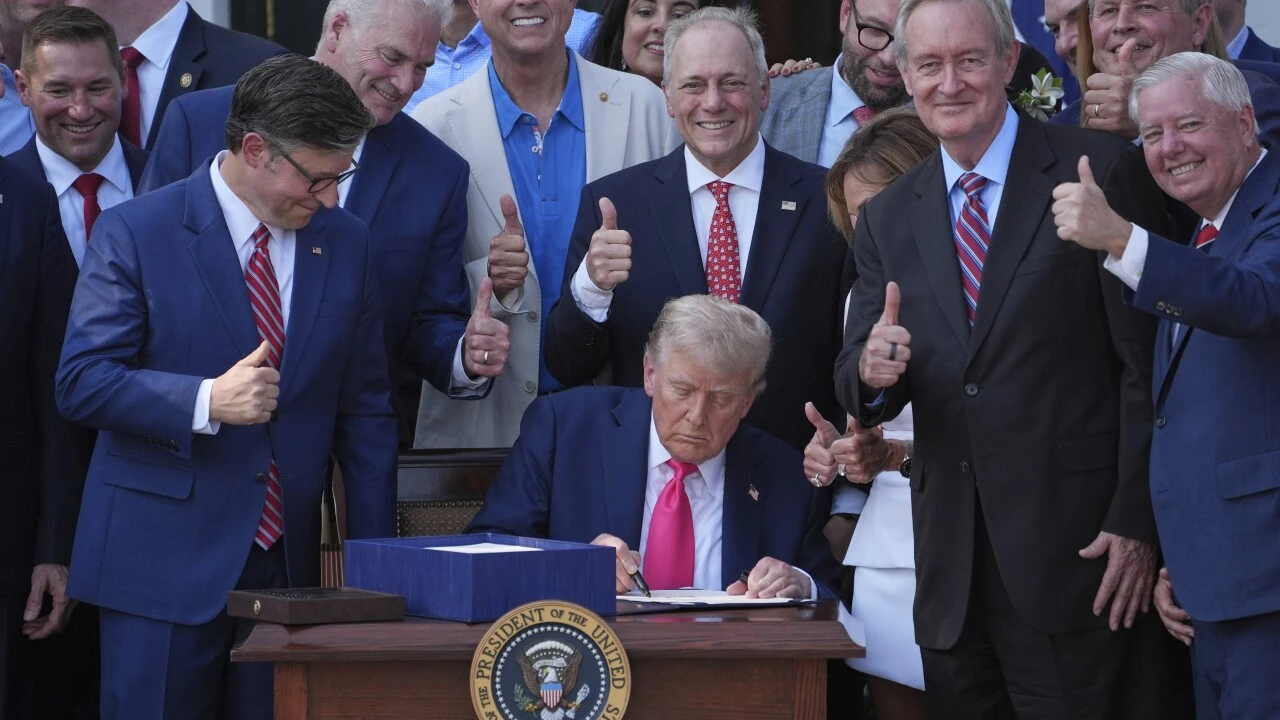
Episode 655- Medicaid, Work Requirements and the Big Beautiful Bill
↓ The P.A.S. Report Podcast is on every podcast platform! ↓


Episode Description
In this episode of The P.A.S. Report, Professor Nick Giordano exposes how the Big Beautiful Bill reveals the dangerous cycle of government dependency and unchecked bureaucratic growth. As Democrats frame the bill as cruel, Professor Giordano breaks down how programs like Medicaid and SNAP have ballooned far beyond their original intent, now cover nearly 1 in 5 Americans. With new work and education requirements for able-bodied adults sparking outrage, this episode dives into the fraud, waste, and abuse plaguing these programs. Even Republicans are hesitant to introduce real reforms for fear of backlash from the American people. He explains how Republicans must go on offense to win the narrative war and restore the American values of personal responsibility, limited government, and true compassion.
Episode Highlights:
- The explosive growth of Medicaid and SNAP: from safety nets to permanent entitlements
- What GAO reports reveal about fraud, abuse, and hundreds of billions in wasted taxpayer dollars
- Why Republicans must control the narrative and defend work requirements as moral and necessary
📲 Subscribe, listen, and share The P.A.S. Report Podcast to stay informed on the latest political issues shaping America.
Click play above to listen to the entire episode or you can listen on any podcast platform
The Big Beautiful Bill and America’s Growing Dependency Crisis
As the Big Beautiful Bill dominates political headlines, most of the coverage completely misses the real issue. This is not just about new work requirements or funding levels. It is about something much deeper and far more dangerous.
Government dependency and bureaucratic growth feed off each other. What began as temporary safety net programs, like Medicaid and food stamps, have evolved into permanent entitlements now covering tens of millions of Americans. Worse, these programs are shielded by emotion-driven narratives that shut down any attempt at meaningful reform.
From Safety Net to Systemic Dependency
Medicaid was originally created to help poor seniors, disabled individuals, and children in low-income households. Today, it covers nearly one in five Americans. That is no longer a limited program for the most vulnerable. It is now a massive entitlement that shows no signs of slowing down.
SNAP, the food stamp program, has also grown dramatically. Since 1990, the number of recipients has more than doubled. More people are enrolled, benefits are higher than ever, and fewer checks are in place to ensure eligibility.
The Manufactured Outrage Over Modest Reform
The Big Beautiful Bill introduced a basic, reasonable standard. If you are able-bodied, of sound mind, and have no dependents, you should be working or attending school for at least 80 hours a month. That comes out to just 20 hours a week.
But that modest proposal sparked widespread outrage. Politicians and media pundits claimed it was cruel and unfair. Yet a study by the American Enterprise Institute found that able-bodied, childless Medicaid recipients spend over 120 hours a month watching TV or playing video games. So why is asking them to work or study for 80 hours considered too much?
The truth is, this is not about fairness. It is about preserving a political and bureaucratic system that thrives on dependency.
Fraud, Waste, and a System Designed to Grow
The Government Accountability Office (GAO) estimates that fraud across federal programs, including Medicaid, costs taxpayers between $233 billion and $521 billion every year. That number does not even include the waste and abuse built into these programs.
The left insists that not a single recipient was gaming the system. They claim that placing any guardrails or requirements on benefits is un-Christian.
Charity is not measured by how generously you spend other people’s money. That is not compassion. That is coercion. True compassion comes through personal charity, not by outsourcing virtue to government bureaucrats.
The GOP Must Go on Offense
Republicans have a serious messaging problem. Democrats win the narrative because they draw on emotion, not facts. Optics matter in politics, and Democrats use moral language to defend a system that is bloated, broken, and unsustainable.
Republicans need to stop playing defense. They must go on offense and make the moral case for reform.
They need to say, “We are doing what the American people asked us to do. We are protecting programs for the truly vulnerable. Medicaid should serve poor seniors, children in need, and disabled individuals. It should not be used to fund healthcare for able-bodied adults who refuse to work.”
This episode is a wake-up call. The Big Beautiful Bill is just the beginning. If the GOP wants to lead, they must live up to the principles of limited government, fiscal responsibility, and self-reliance. They must also start winning the argument with conviction, clarity, and courage.
Timestamps
00:52 Key Headlines
02:45 Exploiting Tragedy for Power
03:30 The Big Beautiful Bill: A Trigger for the Dependent Class
05:32 The Weaponized Morality of the Left
08:44 From Safety Net to Lifestyle
10:00 Dependency by the Numbers
11:40 What the Data Reveals About Recipients
13:00 Fraud, Waste, and Abuse: The Billion-Dollar Drain
16:00 Bureaucratic Growth by Design
19:01 The Personal Argument They Don’t Want to Hear
25:30 Republicans Must Go on Offense
Listen, Learn, and Share
For a full breakdown, listen to the latest episode of The P.A.S. Report Podcast on Apple Podcasts or Spotify.
📢 Subscribe to the podcast and leave a 5-star review
✅ Share the Episode:
If you believe in free speech, civil liberties, and accountable government, share this episode with your network. Help spread the word about the threat posed by unchecked federal power and what can be done to stop it.
Listen to the America’s Found Series
What the Declaration of Independence Really Means | July 4th Special
The P.A.S. Report wants to hear from you. Send your feedback to podcast@pasreport.com. Please leave a 5-star rating and write a review on Apple Podcast.
Protect your privacy online with PureVPN

Online privacy is not optional. A VPN helps keep browsing more private by encrypting internet traffic, masking an IP address, and reducing exposure on public Wi-Fi. It also helps limit tracking and can support access to content when networks block or restrict it.
✅ Encrypts Your Data & Internet Traffic for Added Privacy
✅ Masks Your IP Address & Location
✅ Bypasses Geo-Restrictions & Censorship
✅ Helps Secure Public Wi-Fi Connections
*Disclosure: This site contains affiliate links. If a purchase is made through these links, PA Strategies, LLC may earn a commission at no additional cost to the buyer.
Please share this episode with others & on social media.
*PA Strategies, LLC. may earn advertising revenue or a small commission for promoting products or when you purchase through any affiliate links on this website and within this post.