

Episode Description
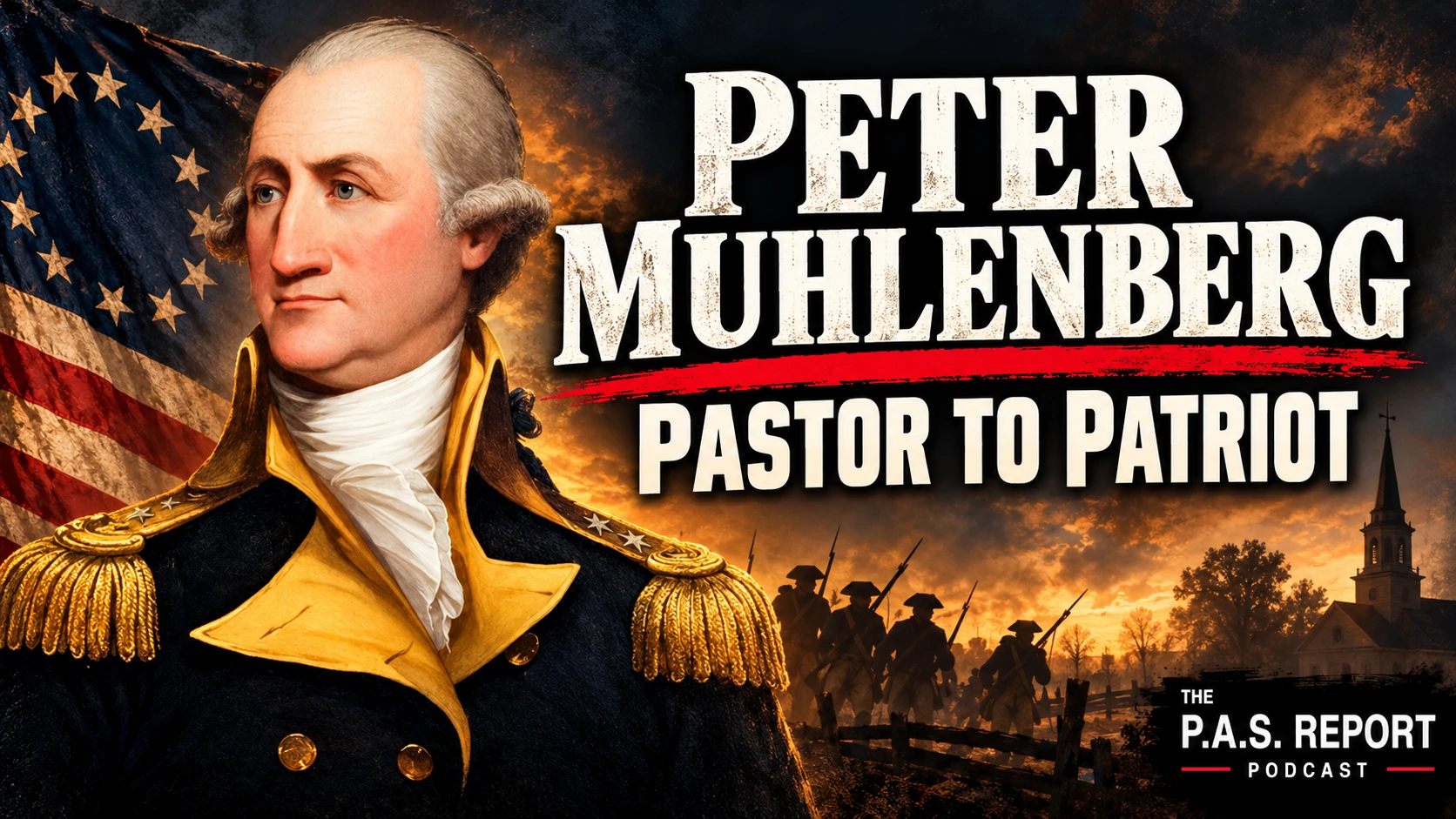
Why did Peter Muhlenberg, an ordained Lutheran pastor, leave his pulpit to lead American soldiers into the Revolutionary War?
In this episode of America’s Founding Series on The P.A.S. Report Podcast, Professor Nick Giordano uncovers the extraordinary story of Peter Gabriel Muhlenberg, the “Fighting Parson” of the American Revolution. Discover how a man of faith traded the safety of his church for a Continental Army command under George Washington and endured the brutal trials of Valley Forge before the American victory at Yorktown. As America marks its 250th anniversary, explore the clash between Peter and his brother Frederick, the first Speaker of the House, and uncover what the Founders intended for religious liberty, the First Amendment, and the separation of church and state.
What You’ll Learn In This Episode:
- The Pulpit Rebellion: Why Peter Muhlenberg left his ministry to command Patriot soldiers and how the famous uniform reveal became a Revolutionary War legend.
- Two Brothers, Two Paths: How Peter took up arms while Frederick chose public service and became the first Speaker of the House.
- The First Amendment’s True Meaning: Why the Founders rejected federal control over religion without excluding people of faith from civic life.
- From Valley Forge to Yorktown: How Muhlenberg endured the hardships of the Revolutionary War and helped secure American independence.
- The Cost of Civic Silence: Why personal conscience demands active participation and why freedom never defends itself.
⭐ Help Keep Authentic American History Alive:
If you believe the sacrifices that built this nation must never be forgotten, follow The P.A.S. Report Podcast, leave a 5-star rating on Apple Podcasts or Spotify, and text a link to this episode to 3 or 4 friends and family members right now.
Click play above to listen to the entire episode or you can listen on any podcast platform
00:00 Peter Muhlenberg: The Pastor Who Joined the American Revolution
02:14 Peter Muhlenberg’s Fight for Liberty and Freedom of Conscience
04:15 Religious Freedom and Government Control in Colonial America
06:39 Peter and Frederick Muhlenberg Clash Over Faith and War
09:16 Revolutionary War Battles: Brandywine, Valley Forge, and Yorktown
12:31 The First Amendment and Separation of Church and State
17:03 Why Civic Silence and Complacency Threaten American Liberty
Peter Muhlenberg: The Revolutionary War Pastor Who Defended Religious Liberty
You hear politicians, commentators, and activists invoke the separation of church and state, but does the First Amendment actually demand that people of faith leave their convictions outside the public square? What happens to liberty when citizens of conscience retreat from civic responsibility? Nearly 250 years ago, a Lutheran pastor named Peter Gabriel Muhlenberg confronted that question and chose a path that would take him from a Virginia pulpit to the battlefields of the American Revolution. His extraordinary story challenges Americans to reconsider the relationship between faith, freedom, and the responsibilities of citizenship.
Peter Muhlenberg and the American Revolution: Why a Pastor Took Up Arms
In 1776, Peter Muhlenberg left his ministry in Woodstock, Virginia, to command the 8th Virginia Regiment in the Revolutionary War. According to a famous historical tradition, Muhlenberg removed his clerical robe during a farewell sermon to reveal military attire beneath. Although historians debate that dramatic detail, his decision to exchange the pulpit for military service remains beyond dispute. He endured the hardships of Valley Forge, fought in major Revolutionary War campaigns, and served at the decisive Siege of Yorktown. In this episode of The P.A.S. Report Podcast, we dive deep into Muhlenberg’s remarkable journey, the moral conflict that shaped his decisions, and the sacrifices that helped secure American independence.
Religious Liberty and the First Amendment: What the Founders Understood
Muhlenberg lived in colonial Virginia, where the government granted special privileges to the established Anglican Church, restricted religious dissenters, and required financial support for the established church. His younger brother, Frederick Augustus Muhlenberg, also served as a Lutheran minister but initially challenged Peter’s decision to take up arms. Their disagreement reflected a profound question about the relationship between religious conviction and civic duty. Yet both brothers ultimately helped shape the American republic. Peter served in the Continental Army and Congress, while Frederick became the first Speaker of the House of Representatives and signed the congressional resolution that proposed the Bill of Rights in 1789. Their story illuminates the Founders’ efforts to prevent federal religious establishment and protect freedom of conscience without excluding religious citizens from public life.
Peter Muhlenberg’s Legacy: Why Civic Responsibility Still Matters
The American Revolution demanded more than declarations, speeches, and promises. It required citizens to accept personal responsibility and sacrifice for principles greater than themselves. Muhlenberg understood that liberty could not survive on conviction alone. As America marks the 250th anniversary of independence, his life raises urgent questions about constitutional freedom, civic participation, religious liberty, and the dangers of political complacency. The Constitution establishes the framework for a free republic, but citizens must possess the knowledge, courage, and determination to preserve it. Muhlenberg’s example offers a timeless reminder: Freedom cannot defend itself, and a republic cannot survive on the silence of those who value liberty.
What You’ll Discover in the Episode
- Why did Peter Muhlenberg abandon his ministry to join the American Revolution?
- What really happened during the legendary farewell sermon in Woodstock, Virginia?
- Why did Frederick Muhlenberg challenge his brother’s decision, and how did both men ultimately serve the new republic?
- What did the Founders intend to protect through the First Amendment’s religious liberty provisions?
- What can Muhlenberg’s sacrifice teach Americans about civic responsibility and the preservation of freedom today?
Subscribe to the podcast and share this link to help more people rediscover the forgotten patriots who built the foundation of the United States.
The P.A.S. Report wants to hear from you. Send your feedback to podcast@pasreport.com. Please leave a 5-star rating and write a review on Apple Podcasts.

Please share this episode with others & on social media.