
↓ The P.A.S. Report Podcast is on every podcast platform! ↓


Episode Description
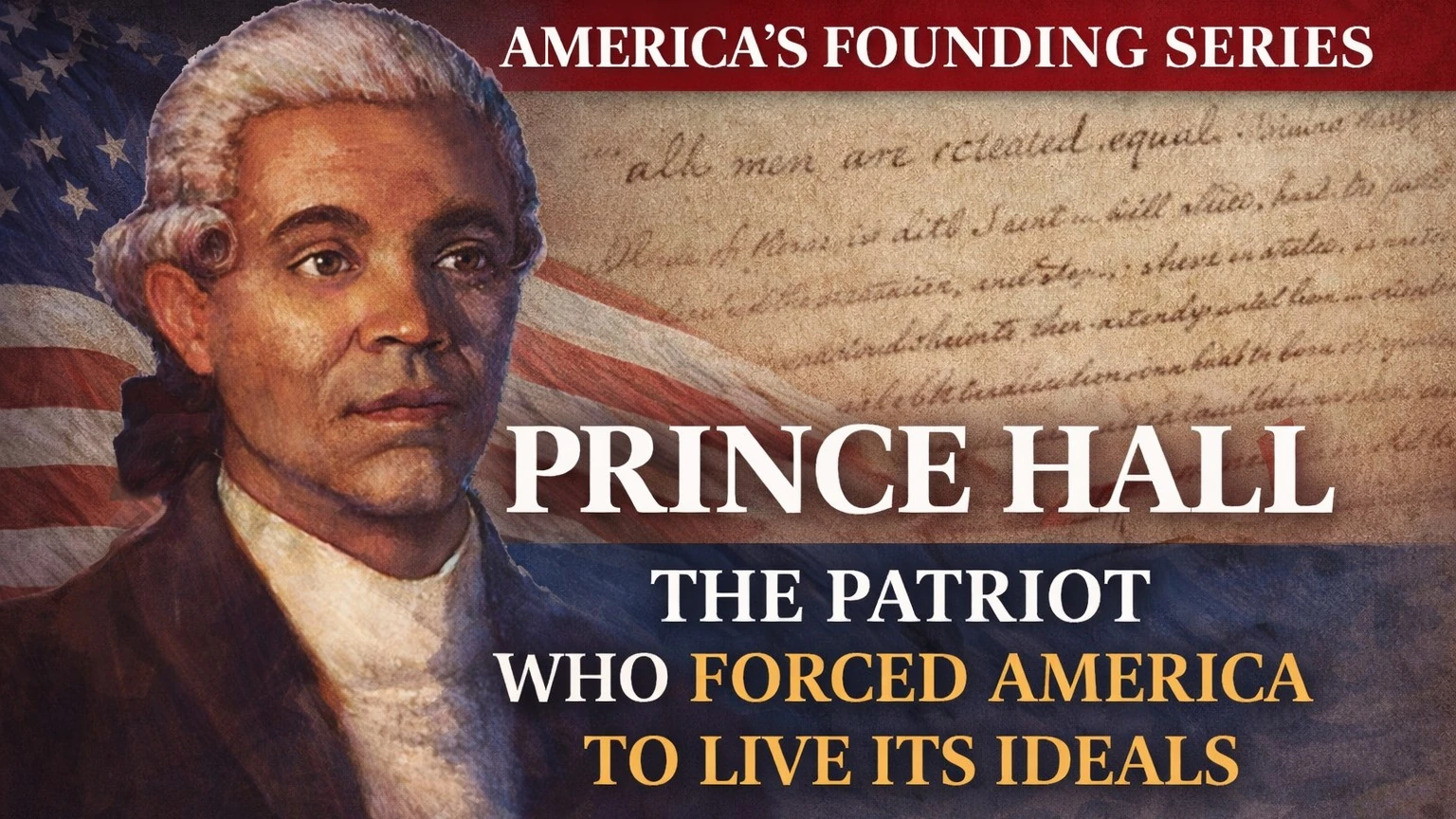
Prince Hall believed in the American Revolution so deeply that he refused to let it fail. While Boston echoed with talk of liberty, he forced the new nation to confront its contradiction: slavery.
This episode tells the story of Prince Hall, the Black patriot who used lawful civic action, Enlightenment philosophy, and institutional leadership to help end slavery in Massachusetts in 1783, years before the U.S. Constitution was ratified. His strategy was not chaos or rejection of the system. It was engagement, petition, and moral accountability.
At a time when many would have turned away from the American experiment, Prince Hall invested in it and demanded it live up to its founding ideals.
What You’ll Learn
- How Prince Hall used the language of natural rights to challenge slavery in Massachusetts
- Why Black participation in the American Revolution created political leverage
- The role of the 1777 petition and the Massachusetts Constitution in ending slavery in 1783
- How John Adams’ “all men are born free and equal” became legally enforceable
- Why civic virtue, lawful engagement, and institutional pressure define true self-government
Prince Hall did not burn down the American system. He held it accountable. His life demonstrates how self-government works when citizens understand both their rights and their responsibilities.
📲 Subscribe to The P.A.S. Report’s America’s Founding Series to learn about forgotten patriots and the untold stories that shaped the fabric of America.
Click play above to listen to the entire episode or you can listen on any podcast platform
00:52 The Contradiction of Liberty in 1777 Boston
06:44 Prince Hall’s Strategic Navigation of Civic Engagement
09:15 The Legal Framework for Abolition in Massachusetts
11:33 Prince Hall’s Vision for Education and Civic Responsibility
Prince Hall: How One Black Patriot Helped End Slavery in 1783
You hear constant debates about America’s founding. Some say the system was fatally flawed from the start. Others insist the founding ideals were noble but never applied equally. If you care about the truth, you are left asking a deeper question: Did the American system contain the tools to correct itself?
Prince Hall provides the answer.
In this episode of The P.A.S. Report Podcast, we dive deep into the life of Prince Hall, the Black patriot who believed in the American Revolution so strongly that he refused to let it collapse under its own contradictions. Through lawful civic action, constitutional pressure, and institutional leadership, Hall helped push Massachusetts toward ending slavery in 1783, years before the U.S. Constitution was ratified.
Who Was Prince Hall and Why Does He Matter Today?
Prince Hall was likely born enslaved around 1735 and later became a free, literate, property-owning member of Boston’s Black community. As the American Revolution unfolded, he saw the tension between the language of natural rights and the reality of slavery in Massachusetts. Rather than reject the system, Hall chose to engage it.
He encouraged Black participation in the Revolutionary War, believing service created political leverage. He and fellow Black Bostonians petitioned the Massachusetts legislature in 1777 using the language of Enlightenment philosophy and natural rights. Hall understood that if all men were created equal, then slavery contradicted the very foundation of American authority.
How the Massachusetts Constitution Helped End Slavery
In 1780, Massachusetts adopted a new constitution drafted largely by John Adams. It declared that all men are born free and equal. Those words echoed the Declaration of Independence, but unlike the Declaration, the Massachusetts Constitution carried legal authority.
Three years later, in the Quock Walker cases of 1783, the Massachusetts Supreme Judicial Court interpreted that constitutional language as incompatible with slavery. Slavery effectively ended in the state. Hall did not act alone, but his petitions and civic engagement helped create the moral and political climate that made this constitutional interpretation possible.
This was self-government in action.
Why Civic Virtue and Lawful Engagement Still Matter
Prince Hall did not promote chaos. He did not reject American institutions. He built them. Through African Lodge No. 459, he fostered education, leadership, and civic virtue. He believed freedom required preparation and character.
If you are concerned about institutional decay today, Hall’s story offers a different model. Reform does not begin with destruction. It begins with understanding the system and holding it accountable to its own principles.
What This Episode Reveals That Most History Books Leave Out
• The exact language Hall used in his 1777 petition
• Why Black service in the Revolution changed the political calculus
• The legal turning point in the Quock Walker decision
• The strategic role of Enlightenment philosophy in abolition
• How Hall built a republic within a republic to prepare citizens for liberty
To hear the full story and discover the deeper lessons about self-government, civic engagement, and constitutional reform:
⬇️⬇️⬇️
Listen to the full episode now on Apple Podcasts, Spotify, or your favorite podcast platform.
⬆️⬆️⬆️
Subscribe to the podcast and share this episode to help more people rediscover the forgotten patriots who built the foundation of the United States.
Protect your privacy online with PureVPN

Online privacy is not optional. A VPN helps keep browsing more private by encrypting internet traffic, masking an IP address, and reducing exposure on public Wi-Fi. It also helps limit tracking and can support access to content when networks block or restrict it.
✅ Encrypts Your Data & Internet Traffic for Added Privacy
✅ Masks Your IP Address & Location
✅ Bypasses Geo-Restrictions & Censorship
✅ Helps Secure Public Wi-Fi Connections
*Disclosure: This site contains affiliate links. If a purchase is made through these links, PA Strategies, LLC may earn a commission at no additional cost to the buyer.
The P.A.S. Report wants to hear from you. Send your feedback to podcast@pasreport.com. Please leave a 5-star rating and write a review on Apple Podcasts.
Please share this episode with others & on social media.