↓ The P.A.S. Report Podcast is on every podcast platform! ↓


Episode Description
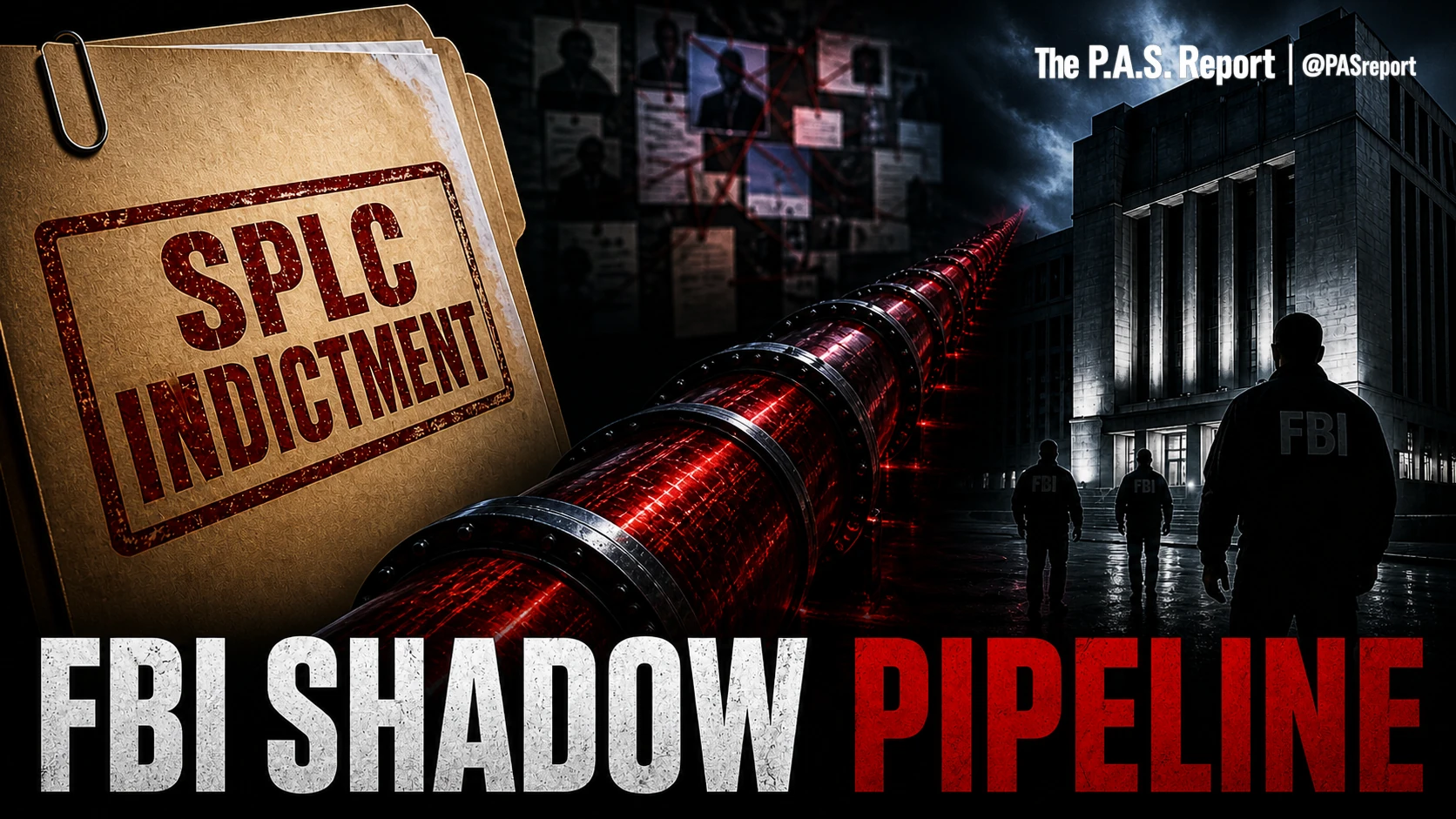
The SPLC indictment raises a much bigger question than nonprofit corruption: Did the FBI and federal bureaucracy use ideological organizations to shape domestic terrorism threat assessments?
In this episode of The P.A.S. Report, Professor Nick Giordano breaks down how the Southern Poverty Law Center became a case study in state power laundering, where partisan activist labels were pushed into FBI work products, training, and the broader domestic terror framework. This episode goes beyond the outrage to expose how the National Strategy for Countering Domestic Terrorism, the Strategic Implementation Plan, and Action 1.1.1c created a backdoor around the Constitution.
What You’ll Learn:
- The Shadow Network: How the SPLC indictment connects to the FBI, informants, shell companies, and domestic terrorism analysis.
- The Case Study: Why the anti-Catholic memo revealed a much deeper pipeline between ideological nonprofits and federal agencies.
- State Power Laundering: How “non-governmental experts” help launder partisan narratives into official federal threat assessments.
- Vague Labels: Why terms like anti-government, anti-authority, extremism, hate, and misinformation can be used to target ordinary Americans.
- The Remedy: What Congress must do to dismantle the mechanism and stop the bureaucracy from using third parties to bypass the Fourth Amendment.
This is not just about the SPLC. The SPLC is the case study. The bureaucracy is the threat. The mechanism must be dismantled.
📲 Subscribe, listen, and share The P.A.S. Report Podcast to stay informed on the latest political issues shaping America.
Click play above to listen to the entire episode or you can listen on any podcast platform
Timestamps
- 00:00 The SPLC Indictment and the Real Threat
- 02:38 The Bureaucracy Behind the SPLC Scandal
- 08:23 How Nonprofits Shape Threat Assessments
- 11:04 The Anti-Catholic Memo Exposed
- 17:14 Vague Labels and Expanding Government Power
- 20:03 The Ideological Influence Pipeline
- 32:45 How Training Shapes FBI Culture
- 37:02 SPLC Influence Inside Federal Agencies
- 40:38 Congressional Oversight and Accountability
- 44:30 The Domestic Terror Architecture
- 55:28 Dismantling the Mechanism
SPLC Indictment Exposes the FBI Shadow Intelligence Pipeline and What It Means for Your Rights
You already know the SPLC has spent years smearing conservatives, Christians, parents, pro-life Americans, and anyone else who refuses to bow before the approved narrative. But the SPLC indictment raises a much bigger question: what happens when the federal bureaucracy uses ideological nonprofits to shape domestic terrorism threat assessments, train agents, and create a backdoor around the Constitution?
Why the SPLC Indictment Goes Beyond Nonprofit Corruption
The easy takeaway says, “SPLC bad.” Fine. That’s obvious. The deeper issue centers on whether the FBI and federal bureaucracy treated the Southern Poverty Law Center as a trusted source inside America’s domestic terror framework. In this episode of The P.A.S. Report, we dive deep into how the SPLC indictment exposes a shadow intelligence pipeline where partisan activist labels can move from nonprofit reports into FBI work products, training materials, threat assessments, and law enforcement culture.
What the Anti-Catholic Memo Revealed About the FBI Pipeline
The anti-Catholic memo, also known as the Richmond Product, showed how ideological labels can shift government focus from criminal conduct to religious and political beliefs. Once bureaucrats treat opposition to abortion, gender ideology, or government overreach as warning signs, every American should pay attention. This isn’t about defending extremists. It’s about stopping a weaponized bureaucracy from using “non-governmental experts” to launder partisan narratives into official federal analysis.
Why the Domestic Terror Framework Threatens Ordinary Americans
The National Strategy for Countering Domestic Terrorism and the Strategic Implementation Plan created a formal mechanism for receiving domestic terrorism-related analysis from non-governmental sources. That word matters: mechanism. Not a random email. Not a casual briefing. A mechanism. Once government agencies can outsource threat identification to ideological organizations, vague labels like anti-government, anti-authority, extremism, hate, and misinformation can become tools to target ordinary Americans while bureaucrats claim clean hands.
What Congress Must Expose About the SPLC and Federal Agencies
Congress needs to demand every FBI, DHS, DOJ, fusion center, training, and threat product that relied on SPLC material or similar partisan activist sourcing. The public deserves a “nutrition label” for non-governmental sources in federal work products: who funded them, what political agenda drove them, what methodology they used, and whether they smeared mainstream groups in the past. The SPLC is the case study. The bureaucracy is the threat. The mechanism must face full exposure.
Open Loops From the Episode
- Which federal agencies knew about SPLC’s informant operation?
- How often did SPLC material appear in FBI or DHS work products?
- Did taxpayer dollars support any part of this ecosystem?
- Which other ideological nonprofits helped shape domestic terrorism analysis?
- Why does the National Strategy’s “mechanism” still matter today?
🎧 Listen to the full episode now
📢 Subscribe to the podcast and leave a 5-star review
✅ Share the Episode
If you value real analysis over manufactured outrage, help spread the word. Subscribe, leave a 5-star review, and share this episode with a few people who will appreciate it.