↓ The P.A.S. Report Podcast is on every podcast platform! ↓


Episode Description
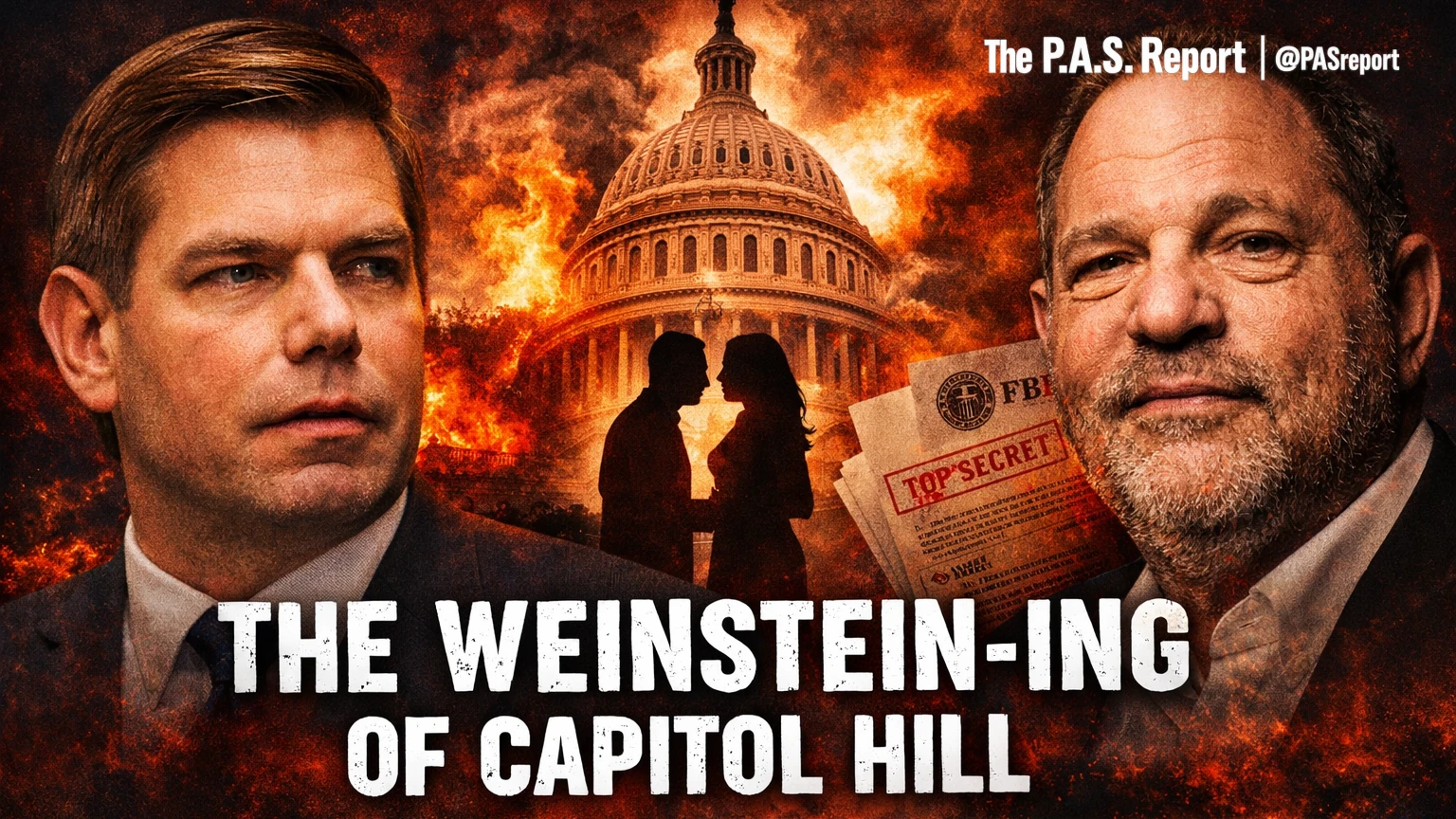
The Eric Swalwell scandal is not just about one disgraced member of Congress. It is about a culture of protection on Capitol Hill, a media ecosystem that sits on damaging information, and a federal bureaucracy that demands trust while operating behind closed doors. In this episode of The P.A.S. Report, Congress, the media, and the bureaucracy are exposed as institutions that protect insiders until silence becomes politically impossible. The episode breaks down why the silence lasted so long, why Democrats moved when they did, and why every American should be skeptical of the sudden outrage now pouring out of Washington.
What You Will Learn:
- Why the Swalwell scandal says more about Congress than it does about one member
- How media outlets act as gatekeepers and release information only when it becomes politically useful
- Why Democrats turned on Swalwell now and what it reveals about power in Washington
- How the Fang Fang episode raises deeper questions about judgment, vulnerability, and national security
- Why the FBI and political leadership owe the public real answers, not sanitized talking points
📲 Subscribe, listen, and share The P.A.S. Report Podcast to stay informed on the latest political issues shaping America.
Click play above to listen to the entire episode or you can listen on any podcast platform
Timestamps
- 01:20 The Illusion of Accountability in Washington
- 03:30 Congress Knew and Stayed Silent
- 09:00 The Ecosystem of Political Protection
- 11:46 Eric Swalwell, Hubris, and Its Consequences
- 14:26 Media Rot and the Cover-Up Machine
- 25:27 Why the Press Waited to Move
- 34:28 The Bureaucracy and National Security Angle
- 38:11 Fang Fang, the FBI, and the Real Questions
Eric Swalwell Scandal: What Congress Knew and Why It Stayed Silent
You see the headlines, hear the outrage, and are told the system is finally working. But if that were true, why do these scandals only explode after the damage is already done? Why do members of Congress, media outlets, and powerful insiders suddenly discover standards only when silence becomes politically impossible? That is the real problem at the center of the Eric Swalwell scandal, and it is why so many Americans no longer trust Washington.
In this episode of The P.A.S. Report Podcast, we dive deep into the Eric Swalwell scandal, the culture of protection on Capitol Hill, the media’s role in sitting on damaging information, and the national security questions tied to Fang Fang and the FBI. This episode goes beyond the salacious details and focuses on the bigger story: how Congress protects insiders, how the press acts as a gatekeeper, and why the public is always the last to know when power is involved.
Eric Swalwell Scandal and Congress’s Culture of Protection
The Eric Swalwell scandal is about more than one disgraced politician. It reveals how Congress operates when one of its own becomes a liability. Public outrage may look like accountability, but too often it is simply damage control. A healthy institution identifies warning signs early and acts before a scandal becomes toxic. Capitol Hill tends to do the opposite. Misconduct is tolerated, buried, or ignored until the political cost of silence becomes too high to sustain.
Capitol Hill Cover-Up and the Media’s Role as Gatekeeper
The media is supposed to expose corruption, not manage the timing of it. Yet the press repeatedly looks less like a watchdog and more like a political gatekeeper that decides which stories the public is allowed to know and when. That is why the Swalwell case raises bigger questions about selective silence, delayed disclosures, and coordinated outrage. When damaging information is held back until the timing is useful, the press stops informing the public and starts managing the public.
Fang Fang, the FBI, and the National Security Questions
Once the Fang Fang angle and the FBI investigation enter the picture, this stops looking like a standard congressional scandal. It becomes a story about judgment, vulnerability, and whether people in power were protected even after obvious red flags emerged. Washington is full of foreign agents, influence peddlers, and people looking for leverage. That reality makes the Swalwell story more serious because the issue is not only misconduct. The issue is whether institutions entrusted with national security saw more than they admitted and whether leadership chose to look the other way.
What This Episode Will Leave You Asking
- Why did Congress stay silent until the scandal became impossible to contain?
- What did reporters know, and why did they wait to move on the story?
- Did the FBI uncover broader concerns about Swalwell’s judgment or vulnerability?
- Why was Swalwell allowed to remain on the Intelligence Committee after Fang Fang?
- How many other scandals are still being managed behind closed doors?
🎧 Listen to the full episode now
📢 Subscribe to the podcast and leave a 5-star review

✅ Share the Episode
If you value real analysis over manufactured outrage, help spread the word. Subscribe, leave a 5-star review, and share this episode with a few people who will appreciate it.