
↓ The P.A.S. Report Podcast is on every podcast platform! ↓


Episode Description
In this episode of The P.A.S. Report Podcast, Professor Nick Giordano breaks down the Trump-Putin Alaska Summit, a high-stakes meeting that could reshape the future of the Ukraine war and America’s role on the global stage. From what we know about the talks, to what remains hidden behind closed doors, to the furious backlash from Democrats and foreign policy elites who’ve failed for decades, Professor Giordano explains the truth about the summit and why this moment matters. With Trump preparing to meet Zelensky and European leaders next, the path forward could decide whether the Russia-Ukraine war finally ends or drags on indefinitely.
Episode Highlights
- Key takeaways from the Trump-Putin Alaska Summit and what was said publicly versus privately.
- Why Democrats and foreign policy elites are outraged and how their failed track record explains it.
- What comes next as Trump readies for critical meetings with Zelensky and European leaders.
📲 Subscribe, listen, and share The P.A.S. Report Podcast to stay informed on the latest political issues shaping America.
Click play above to listen to the entire episode or you can listen on any podcast platform
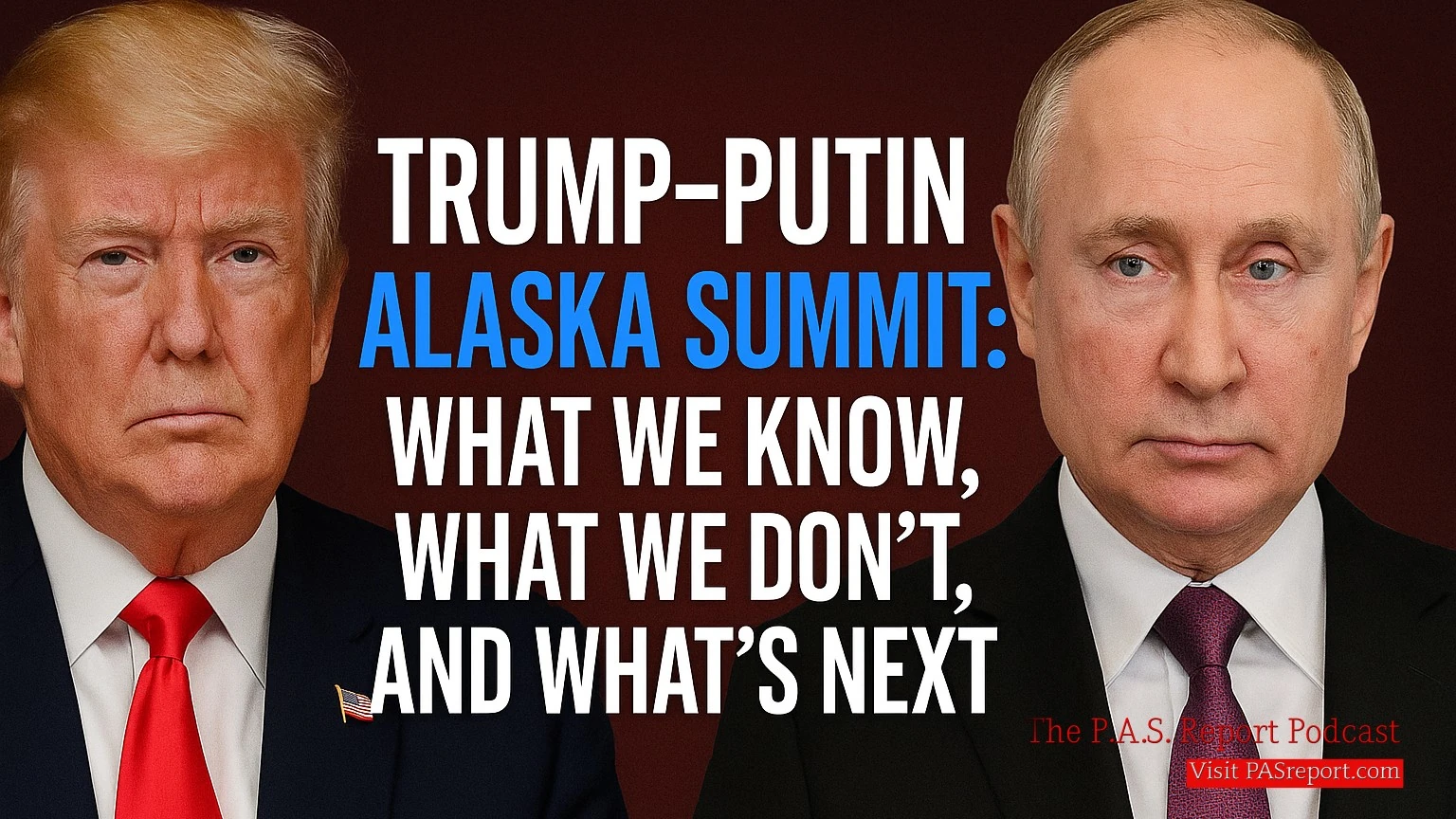
Trump-Putin Alaska Summit: What We Know, What We Don’t, and What’s Next
The Trump–Putin Alaska Summit has sent shockwaves through the political and media landscape. For the first time since returning to the presidency, Donald Trump sat down face-to-face with Vladimir Putin in Anchorage, Alaska. The summit was dramatic, historic, and controversial. It sparked intense debate about its meaning for the war in Ukraine, U.S.–Russia relations, and America’s role on the global stage.
While much of the media coverage has been heavy on spin and light on substance, here is a breakdown of what actually happened, what remains unclear, and why this meeting could shape the future of international politics.
What We Know from the Alaska Summit
The summit was billed as “extremely productive” by President Trump, even though no formal ceasefire or peace agreement was reached. Trump emphasized that Ukraine’s involvement is essential to any settlement and urged Kyiv to “make a deal.”
Putin, meanwhile, pushed for Ukraine to cede Donetsk, Luhansk, and parts of Kherson and Zaporizhzhia in exchange for freezing the front lines. This proposal highlights just how high the stakes remain.
Another key development was the idea of NATO-style security guarantees for Ukraine. While falling short of full NATO membership, these guarantees would provide military backing from the U.S. and Europe without crossing Russia’s red line. European leaders and Zelensky cautiously welcomed the idea, seeing it as a possible compromise.
What We Don’t Know
As with any high-stakes summit, much of the real negotiation happened behind closed doors. We do not yet know whether sanctions relief, U.S. troop deployments, or energy markets were part of the discussion. Nor do we know the details of what “security guarantees” for Ukraine would actually entail.
Adding to the intrigue, the summit ended with an unusual twist. Putin delivered his final words in English, a language he understands and speaks far more than he lets on. By closing with the line, “And next time in Moscow,” Putin sent a powerful signal. It was a deliberate display of confidence and a reminder that he expects future dialogue to continue on Russian terms.
The Critics and the Failed Establishment
Almost immediately, Democrats and the foreign policy establishment pounced, accusing Trump of giving Putin “exactly what he wanted” by meeting with him. The irony is staggering. These are the same voices that have mismanaged U.S.–Russia relations for three decades.
In the 1990s, the Clinton administration pushed NATO expansion despite promises to the contrary.
George W. Bush pushed to bring Georgia and Ukraine into NATO, which directly contributed to war breaking out in Georgia in 2008.
Barack Obama promoted his “reset button,” only to watch Putin seize Crimea in 2014. His weak response emboldened Russia.
Joe Biden’s administration undermined the Istanbul Agreement in 2022, prolonging the Ukraine war and the suffering that came with it.
These critics do not want peace. They want endless confrontation because endless war keeps them relevant, keeps defense contracts flowing, and keeps America tied up in conflicts that drain our resources.
Where We Go From Here
The Alaska Summit was only Round One. This week, President Trump is scheduled to meet with Ukrainian President Volodymyr Zelensky and key European leaders in Washington. NATO Secretary General Jens Stoltenberg is also expected to attend.
This could set the stage for a three-way negotiation involving Trump, Zelensky, and Putin. The stakes could not be higher. America faces a choice: pursue a settlement that could end the war, or allow the same failed establishment voices to drag us deeper into endless conflict.
The future of U.S.–Russia relations, the fate of Ukraine, and America’s credibility on the world stage all hang in the balance. What happens next will determine whether we move toward peace or prolong yet another costly, unwinnable war.
Final Thoughts
The Trump–Putin Alaska Summit was not just about two leaders meeting in Anchorage. It was about whether America is ready to break free from the failures of the past 30 years and finally put its interests first.
Putin’s closing words, “And next time in Moscow,” underscore that this story is far from over. The coming weeks will reveal whether diplomacy takes root or whether the establishment doubles down on failure.
🎧 Listen to the full episode of The P.A.S. Report Podcast where I break down the history of banking weaponization, Biden’s expansions, Trump’s executive order, and why the FIRM Act is the key to protecting every American’s financial freedom.
👉
Don’t forget to subscribe to The P.A.S. Report, share this episode with your friends and family, and sign up for our newsletter for more in-depth political analysis.
Timestamps
00:54 Unpacking the Trump-Putin Alaska Summit
04:10 The Importance of Diplomatic Engagement to End the War in Ukraine
10:51 What We Know Regarding the Alaska Summit
18:46 The Unanswered Questions Post-Summit
23:32 How the Foreign Policy Establishment Has 30 Years of a Failed Track Record
26:11 Why Foreign Policy Elites Don’t Want to See a Peaceful Settlement
35:18 Looking Ahead, The Path to Peace, and Why Trump May Be the Key
Listen, Learn, and Share
For a full breakdown, listen to the latest episode of The P.A.S. Report Podcast on Apple Podcasts or Spotify.
📢 Subscribe to the podcast and leave a 5-star review
✅ Share the Episode
If you believe in free speech, civil liberties, and accountable government, share this episode with your network. Help spread the word about the threat posed by unchecked federal power and what can be done to stop it.
Listen to the America’s Found Series
Elbridge Gerry: Patriot, Provocateur, and the Man Behind Gerrymandering
The P.A.S. Report wants to hear from you. Send your feedback to podcast@pasreport.com. Please leave a 5-star rating and write a review on Apple Podcast.
Protect your privacy online with PureVPN

Online privacy is not optional. A VPN helps keep browsing more private by encrypting internet traffic, masking an IP address, and reducing exposure on public Wi-Fi. It also helps limit tracking and can support access to content when networks block or restrict it.
✅ Encrypts Your Data & Internet Traffic for Added Privacy
✅ Masks Your IP Address & Location
✅ Bypasses Geo-Restrictions & Censorship
✅ Helps Secure Public Wi-Fi Connections
*Disclosure: This site contains affiliate links. If a purchase is made through these links, PA Strategies, LLC may earn a commission at no additional cost to the buyer.
Please share this episode with others & on social media.
*PA Strategies, LLC. may earn advertising revenue or a small commission for promoting products or when you purchase through any affiliate links on this website and within this post.